
|

|
| Brigadier General Guy Clifford STUBBS DSO and Bar | |
|
2nd Battalion Suffolk Regiment and General Staff Date of birth: 19th November 1883 Date of death: 18th October 1939 Died aged 55 Buried at Pitminster (Saint Mary and Saint Andrew) Churchyard in Somerset |

|
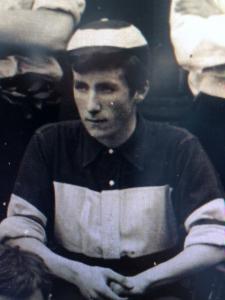
| Guy Clifford Stubbs was born at Granborough, Buckinghamshire on the 19th of November 1883 the fifth son of The Right Reverend Charles William Stubbs DD, Bishop of Truro and Harriet (nee Turner) Stubbs of Ely College in Cambridgeshire. He was educated at Lancing College where he won an Exhibition and was in Heads House from September 1895 to July 1902. He was a member of the committee of the Lancing College Magazine in 1901 and was a member of the Officer Training Corps, being promoted to Colour Sergeant in on the 20th of September 1901. He was a member of the 2nd Cricket XI in 1902 and was a member of the Football XI from 1899 to 1902 being Honorary Secretary in 1900 and 1901 and Captain in 1901. He was appointed as a Prefect in 1900 and as Head of School in 1901. The Lancing College Magazine wrote the following on his football season in March 1901:- "Has played consistently well throughout the season; often succeeds in breaking up the combination of the opposing forwards; goes hard, heads excellently, and passes well, though his shooting is faulty. Captain next year." And the following in March 1902:- "Has played inside left for the larger part of the season, and was of great service there in keeping the forwards together; his shooting was, at times, effective, and his passing accurate, but his real place is at centre half, where he plays a scientific game, using his head well. As captain, he is always bright and cheery--adverse numerical results notwithstanding. For various causes, entirely out of his own control, he was not able to get his team together, with places definitely fixed, early in the season." On leaving school he passed 76th in the examinations for the Royal Military College Sandhurst in late 1902. While at Sandhurst he won his colours for football on the 15th of November 1902 following the Sandhurst, Woolwich match. On passing out was commissioned as a 2nd Lieutenant in the 2nd Battalion Suffolk Regiment on the 10th of October 1903. He was promoted to Lieutenant on the 25th of May 1906 and was appointed as Adjutant of his battalion on the 1st of November 1909. On the 1st of February 1914 he was posted to the Royal Military College Sandhurst where he commanded a Company of Gentleman Cadets and was promoted to Captain on the 2nd of March 1914. He left his post at Sandhurst on the 5th of February 1916 and rejoined his regiment on the 16th of February 1916. He embarked for service in France on the 3rd of March 1916 where he was attached to the Staff of 3rd Division. On the 28th of March 1916 he assumed command of the 2nd Battalion, Suffolk Regiment following the wounding of Lieutenant Colonel d'Arch-Smith. OOn the 1st of July 1916 the battalion was travelling from St Omer to join the fighting on the Somme when their commanding officer, Lieutenant Colonel d'Arch-Smith, was invalided. Guy Stubbs again took command of the battalion and led them through the fighting at Longueval and Delville Wood on the 20th of July and at Trones Wood on the 16th of August 1916 when he was wounded but remained on duty. He was promoted to Acting Lieutenant Colonel while in command of a battalion on the 22nd of August 1916. He was awarded the Distinguished Service Order which was announced in the King's New Years Honours List of the 1st of January 1917. At 7.30am on the 14th of June 1917 the 2nd Battalion attacked German trenches at Arras which they held against counter attacks and artillery bombardments until the 18th during which time they suffered casualties of 10 officers and 240 other ranks. For his leadership and courage that day Guy Stubbs was awarded a Bar to the Distinguished Service Order which was announced by the War Office on the 17th of September 1917. The citation read:- "For conspicuous gallantry and devotion to duty in, holding captured trenches with his battalion for three days against hostile counter-attacks. He proceeded at a critical moment to the captured line, under heavy enemy barrage, to encourage his men and reorganise the defence, and shot several of the enemy who were in shell-holes. His gallant example and untiring energy inspired all ranks with the greatest enthusiasm." OOn the 9th of July 1917 he relinquished the rank of Acting Lieutenant Colonel and handed over command of the battalion. He left France to take up an appointment as an instructor at the Senior Officers' School at Aldershot. By July 1918 he had returned to France and resumed command of the 2nd Battalion. At dawn on the 30th of August he led the battalion in the capture of Ecoust de Main although they were forced to fall back at the end of the day. In mid September 1918 he relinquished command of the battalion to take command of the 121st Infantry Brigade. During the Great War he was mentioned in despatches four times and was wounded three times. He was promoted to Brevet Lieutenant Colonel on the 6th of April 1919 when he took command of the 4th Battalion, Suffolk Regiment, a post he left on the 23rd of September 1919. On the 29th of September 1919 he took command of the 10th Battalion, Queen |
|
 | |
| Heads House |
Back